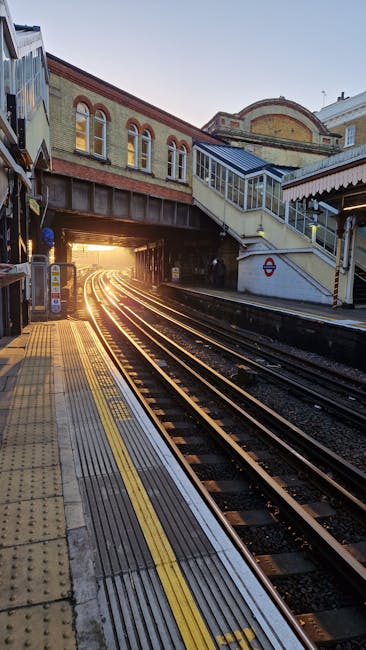
Streatham Hill Station Removal Timing and Parking Tips
If you are moving near Streatham Hill station, timing and parking can make the whole day feel either calm or slightly chaotic. Streets around rail stations have their own rhythm: school runs, commuter traffic, delivery vans, lunch-hour bursts, and the occasional double-parker who seems to believe rules are more of a suggestion. This guide to Streatham Hill station removal timing and parking tips is designed to help you plan the move with fewer surprises, whether you are shifting a flat, clearing a house, or arranging a small office move.
We will cover the best times to schedule your move, how to think about parking around the station, what to do if access is tight, and the practical steps that make loading faster. If you are comparing service options as well, you may find it useful to look at home moves, man and van support, or removal truck hire depending on the size of the job.
Quick takeaway: around Streatham Hill station, good timing often matters as much as manpower. A carefully chosen time slot, a realistic parking plan, and clear loading access can save you money, stress, and a lot of standing around with the kettle still unplugged.
Table of Contents
- Why Streatham Hill station removal timing and parking tips Matters
- How Streatham Hill station removal timing and parking tips Works
- Key Benefits and Practical Advantages
- Who This Is For and When It Makes Sense
- Step-by-Step Guidance
- Expert Tips for Better Results
- Common Mistakes to Avoid
- Tools, Resources and Recommendations
- Law, Compliance, Standards, or Best Practice
- Options, Methods, or Comparison Table
- Case Study or Real-World Example
- Practical Checklist
- Conclusion
- Frequently Asked Questions
Why Streatham Hill station removal timing and parking tips Matters
Streatham Hill is busy in a very London way. It is not just the station itself; it is the movement around it. Cars stop, buses swing through, pedestrians cross in waves, and parking spaces can disappear in minutes. For removals, that means the wrong time slot can turn a straightforward move into a slow, stop-start job where the team spends more time navigating than carrying.
The reason timing matters is simple: access is everything. If the van cannot stop close to your property, every box, chair, and wardrobe has to travel further. That extra distance might only be a few metres, but on moving day it can feel like a marathon. And yes, your sofa somehow becomes heavier the moment you need to carry it around a corner in light drizzle.
Parking matters just as much. A good parking plan helps the crew load efficiently and reduces the chance of fines, complaints, or awkward negotiations with neighbours. If you are moving a family home, booking a house removalists service can help with larger items and tighter schedules. If the move is smaller, a flexible man with van setup may be enough, provided access is planned carefully.
There is also the local reality of station-area traffic. Early mornings can be commuter-heavy. Midday can be better, but not always if local deliveries or school traffic are in play. Later in the afternoon, things can pick up again. So the phrase "best time" is less about one magic hour and more about choosing the least crowded window for your specific street, property type, and move size.
How Streatham Hill station removal timing and parking tips Works
In practice, this topic is about three linked decisions: when to move, where the vehicle will park, and how the team will move items between the property and the vehicle. If one of those breaks down, the whole operation slows.
The first decision is timing. A move near Streatham Hill station usually works best when you avoid peak commuter pressure and when your building access is at its calmest. For some streets, that may mean a late morning start. For others, a midweek afternoon is less painful. The point is not to chase a universal rule but to match the slot to the street.
The second decision is parking. You need enough room for the vehicle to stop safely, open doors, and load without causing obstruction. Sometimes that is a straightforward roadside space. Sometimes it means finding the nearest practical loading point and using trolleys or shorter carrying routes. If you are moving commercial stock or office kit, services like commercial moves or office relocation services can be more suitable because they account for business access, equipment, and time-sensitive scheduling.
The third decision is flow. A move works better when boxes are ready before the van arrives, furniture is dismantled if needed, and the route from the front door to the vehicle is clear. The less time spent fussing with loose screws or hunting for a missing tape gun, the better. Simple, but true.
For bigger loads, a moving truck can be more efficient than making multiple trips in smaller vehicles. For awkward single items or collection jobs, furniture pick up may be the most practical option. The right method depends on volume, access, and how much time you want to spend standing on the pavement.
Key Benefits and Practical Advantages
Planning around Streatham Hill station is not just about avoiding inconvenience. Done well, it gives you real operational advantages.
- Faster loading: the closer the vehicle can stop, the less carrying time is wasted.
- Lower stress: fewer parking surprises means fewer last-minute adjustments.
- Better team efficiency: movers can keep a steady pace instead of pausing for access issues.
- Reduced disruption to neighbours: a tidy, well-timed move is less likely to block entrances or annoy residents.
- Less risk of damage: shorter carry distances usually mean fewer bumps, scrapes, and awkward turns.
There is also a financial angle. When access is simple, moving crews can work more efficiently. That can matter for jobs priced by time, or even just for the general quality of the day. No one enjoys paying to sit in traffic with a wardrobe on the back of a van.
Another practical benefit is predictability. If you know that the morning school run will make the street awkward, you can schedule later. If you know the flat is up narrow stairs, you can choose help that reflects the real challenge, not the optimistic version of it. For household packing support, packing and unpacking services can save a surprising amount of time before and after the move.
Who This Is For and When It Makes Sense
This advice is useful for more people than you might think. It is not just for big family moves. In fact, some of the trickiest jobs are the small ones, because people assume they will be easy and do not plan enough.
You will benefit from these tips if you are:
- moving from a flat near Streatham Hill station;
- relocating from a terraced house with limited roadside space;
- clearing out a property between tenants;
- moving office equipment in a tighter London street;
- collecting bulky furniture from a nearby property;
- booking a same-day or short-notice removal job;
- trying to avoid parking stress on an already busy day.
If you are doing a simple one-van move, a man and van arrangement can be a sensible middle ground. If you need more support, larger lifting capacity, or help managing a full property, a more comprehensive removal service may be a better fit. Truth be told, the right choice often comes down to how many trips you want to avoid.
It also makes sense if you are coordinating with landlords, building managers, or neighbours. Around station areas, courtesy goes a long way. A quick heads-up can prevent friction before it starts.
Step-by-Step Guidance
Here is a practical way to plan a removal near Streatham Hill station without overcomplicating things.
- Check your property access first. Look at the route from front door to pavement. Note stairs, narrow hallways, key codes, intercoms, and any awkward turns.
- Choose your timing with local traffic in mind. Avoid obvious rush periods where possible. Mid-morning on a weekday is often calmer than early commuter hours, but always judge your own street.
- Decide where the vehicle can stop. Identify the nearest safe stopping point, not just the nearest one that looks convenient. A legal, workable spot beats a risky one every time.
- Plan for loading distance. If the vehicle cannot park right outside, think about trolleys, extra porters, or smaller loads carried in stages.
- Prepare items before arrival. Boxes sealed, drawers emptied, loose items bagged, furniture protected. It sounds obvious. It is also where many moves go off the rails.
- Protect fragile routes. Hallways, lift interiors, and door frames can get scuffed quickly when people rush.
- Communicate with everyone involved. Movers, tenants, neighbours, and building contacts should all know the rough schedule.
- Keep a buffer. A little time cushion helps if traffic, weather, or building access slows things down.
If you are using a larger vehicle, the planning stage matters even more. A removal truck hire option can be efficient, but only if the stopping point and access route have been thought through in advance.
One small but useful habit: walk the move route once before the day starts, ideally when you are not rushing. You will often spot something ordinary, like a low branch, a tight corner, or a gate latch that needs a proper shove. That tiny walk can save a lot of faff later.
Expert Tips for Better Results
These are the details that experienced movers tend to care about, because they make a real difference.
Tip 1: Aim for the quietest realistic slot, not the "perfect" one. People often chase an ideal time that clashes with life. A workable, slightly less perfect slot is usually better than a dreamy one that everyone keeps missing.
Tip 2: Keep the loading order sensible. Heavy and bulky items first, then medium boxes, then fragile pieces last. If the sofa goes in after the boxes, you may be rebuilding the van like a game of awkward Tetris.
Tip 3: Use the nearest practical parking point, not the nearest theoretical one. Sometimes the closest space is blocked, too tight, or likely to create a neighbour complaint. Ten extra metres of carrying can still be better than a vehicle trapped at an angle.
Tip 4: Separate essentials early. Documents, medication, chargers, keys, and a kettle set-up box should not vanish into the main load. You will thank yourself later. Possibly on the same day.
Tip 5: Match the service to the access. A compact move may only need a van and a couple of hands. A complicated property with multiple floors may need a stronger setup and more careful scheduling. For those situations, a service like man with van can work well if the access is manageable, while a bigger relocation may need a fuller package.
Tip 6: Think about return parking too. If the crew needs to unload, then return for more items, the second parking attempt can be the awkward one. Plan for that before it happens.
Expert summary: the best removal day near Streatham Hill station is rarely the cheapest-looking one on paper. It is the one where timing, parking, access, and load size are matched properly. That is the bit that saves headaches.
Common Mistakes to Avoid
Most moving problems near busy transport areas are not dramatic disasters. They are small mistakes that stack up.
- Assuming parking will "just be fine". It often is not, especially near station streets.
- Booking too close to peak traffic. A 20-minute delay can ripple through the whole day.
- Underestimating carrying distance. A van parked round the corner is a different job from one outside the door.
- Forgetting to clear access inside the property. Hall clutter, loose rugs, and stored items slow everything down.
- Not checking building rules. Some flats and blocks have specific loading expectations, lift use limits, or access windows.
- Leaving packing until the last minute. That is how the moving day becomes a sorting day. Not ideal.
- Using the wrong vehicle size. Too small means extra trips; too large can mean parking stress you did not need.
There is a slightly unglamorous truth here: most moving-day trouble comes from uncertainty, not from the move itself. If you are clear on timing and parking, half the battle is already won.
Tools, Resources and Recommendations
You do not need fancy equipment, but a few simple tools make life easier.
- Measuring tape: useful for checking furniture dimensions and doorway clearance.
- Boxes and labels: better labels mean faster unloading and fewer mystery boxes later.
- Furniture covers or blankets: good for protecting finishes in tight hallways.
- Trolley or sack truck: helpful when the parking spot is not right outside.
- Basic toolkit: keep screwdrivers, Allen keys, and a small bag for fixings.
- Phone charger and power bank: boring, yes, but surprisingly useful when coordination matters all day.
For customers who want help with the messy middle of moving day, the combination of packing support and a suitable vehicle can be a very sensible choice. If you are relocating an office, pairing logistics with office relocation services can reduce downtime and keep things orderly. For businesses or homes with more complex needs, this is often the difference between a smooth day and a very long one.
If you are still working out what kind of help you need, it can also be worth reading the company's about us page to understand the approach, then using the contact us page to ask practical questions about access, timings, or vehicle choice. That's usually where the useful detail lives anyway.
Law, Compliance, Standards, or Best Practice
Parking and removals around Streatham Hill should always be handled with care and common sense. Local restrictions, yellow lines, bay rules, loading limits, and access requirements can change from street to street, so it is wise to check the exact conditions where your move will happen. Do not assume that a space used by one vehicle earlier in the week will work the same way on your moving day.
Best practice is to keep the vehicle parked legally, avoid blocking driveways or crossings, and stay mindful of pedestrians, cyclists, and other road users. If your move requires more time on-street, build in extra margin so the crew is not forced into rushed decisions. That is especially important near a station, where people are already moving quickly and visibility can be busy.
There may also be building-specific expectations, such as lift bookings, delivery windows, or permission from a concierge or landlord. Those are not glamorous details, but they matter. In many London moves, the quiet administrative bits are what keep things smooth.
If you are handling business assets, keep records of what is moving and who is responsible for it. For commercial or office relocations, careful labelling and asset tracking are simply good practice. Less drama. Fewer missing cables. Everyone happier.
Options, Methods, or Comparison Table
Different moving setups suit different levels of access and complexity. Here is a simple comparison to help you decide.
| Method | Best for | Parking needs | Strengths | Watch-outs |
|---|---|---|---|---|
| Man and van | Small to medium moves, single loads, flexible jobs | Moderate, often easier with compact access | Flexible, practical, often quick to arrange | May be limited for larger loads or multiple bulky items |
| Man with van | Simple domestic moves, collections, local transport | Moderate to low depending on van size | Good for straightforward access and lighter logistics | Can become less efficient if there are many stairs or long carries |
| Moving truck | Full-house moves, larger volumes, more furniture | Higher, needs careful stopping space | Moves more in one trip, efficient for bigger jobs | Harder to park near tight station roads |
| Removal truck hire | Structured moves needing more capacity and planning | Higher, best when access is mapped in advance | Useful for larger or more organised relocations | Needs better preparation and route planning |
For many Streatham Hill moves, the decision is not about which service sounds best on paper. It is about what can actually park, load, and move without creating a bottleneck. That practical lens saves a lot of guesswork.
Case Study or Real-World Example
Imagine a small two-bedroom flat a short walk from Streatham Hill station. The resident has a narrow hallway, a few larger pieces of furniture, and a move-out deadline at midday. The instinct might be to book the earliest possible slot, but that clashes with local traffic and makes parking more difficult.
Instead, a later morning start gives the street time to settle. The mover confirms the parking point in advance, keeps fragile items packed separately, and dismantles one awkward bed frame before the vehicle arrives. The team parks as close as possible without causing disruption, and the carry distance stays manageable.
What changed the outcome? Not magic. Just timing, parking, and preparation.
In another scenario, a small business near the station needs to move desks, monitors, and archive boxes. The business chooses a more organised setup and uses commercial moves support because the move has to happen quickly and with less disruption to staff. They also use labelled boxes and a clear loading sequence, so the van is not sitting idle while someone hunts for cables under a desk. It is a small thing, but those small things are what make office moves feel under control.
Practical Checklist
Use this before moving day. It is simple, but it helps.
- Confirm the exact address and access details.
- Check the best likely time window for street traffic.
- Identify where the vehicle can legally stop.
- Measure any awkward furniture and doorways.
- Book the right size of vehicle or service.
- Pack and label essentials separately.
- Clear hallways, entrances, and stair routes.
- Protect floors, corners, and fragile surfaces where needed.
- Tell neighbours or building contacts if parking may be affected.
- Keep keys, documents, and chargers accessible.
- Build in a little extra time for the unexpected.
Small reminder: if you feel rushed before the move starts, slow the setup down rather than the loading later. That trade-off usually pays off.
Conclusion
Streatham Hill station removal timing and parking tips come down to common sense, local awareness, and a bit of advance planning. The best move is usually the one that gives the crew space to work, avoids the busiest traffic windows, and keeps parking as straightforward as possible. Near a station, that balance matters more than usual.
If you remember only one thing, let it be this: a move gets easier when the vehicle, the street, and the schedule all work together. That is what turns a stressful day into a manageable one. Not perfect, just manageable. And honestly, manageable is a win.
If you are comparing service options or preparing a move and want help matching the setup to your access, start with the service that fits your property size and timing needs. A little planning now can save a lot of lifting later.
Get a free quote today and see how much you can save.
Frequently Asked Questions
What is the best time for a removal near Streatham Hill station?
The best time is usually when local traffic is calmer and parking is easier, often mid-morning or another off-peak window. The exact slot depends on your street, building access, and whether school or commuter traffic affects the area.
How do I plan parking for a move near a station?
Start by identifying the nearest safe and legal stopping point, then work out how far items will need to be carried. If the space is tight, factor in trolleys, extra help, or a smaller vehicle rather than assuming the van can stop outside the door.
Do I need a big truck or will a van be enough?
That depends on volume and access. A van can be ideal for smaller, local jobs. A larger truck makes more sense for full-house moves or multiple bulky items, but it needs more parking space and careful planning.
How much does timing affect the cost of a removal?
Timing can affect cost indirectly because busy periods may slow loading and unloading. When access is easier, the job usually runs more smoothly. Exact pricing varies by service, load size, and the complexity of the move.
What if I cannot park directly outside my property?
That is common in busy London areas. The solution is to plan the nearest workable point, then organise the carry route. If the distance is significant, you may need more labour, more time, or a different vehicle setup.
Is a man and van service suitable for Streatham Hill moves?
Yes, for many smaller moves it is a very practical choice. It is especially useful when the load is manageable and the access is not too complicated. For bigger homes or heavier jobs, a larger removal option may be better.
Should I pack everything before the moving crew arrives?
Ideally, yes. Finished packing saves time and reduces confusion on the day. At minimum, fragile items, loose clutter, and essentials should be organised early so the team can focus on loading efficiently.
What should I do if the property has narrow stairs or a tight entrance?
Measure the route, remove obstacles, and let the movers know in advance. Tight access often changes how furniture should be moved and may influence whether something needs to be dismantled first.
Can office relocations near Streatham Hill be managed the same way as home moves?
Not quite. Office relocations usually need tighter scheduling, clearer labelling, and a better plan for equipment and documents. The parking and timing logic is similar, but the operational pressure is often higher.
What are the most common parking mistakes people make?
The biggest mistakes are assuming a space will be free, forgetting about local restrictions, and underestimating how long loading will take. Those three errors create most of the avoidable stress on moving day.
Where can I find more information about the company's services?
You can review the available services on the relevant pages, such as home moves, house removalists, and packing and unpacking services, then use the contact page to ask about your specific move.
What if my move date changes at short notice?
Speak to the provider as early as possible and explain what changed. Short-notice moves are often still manageable, but the timing and parking plan may need to be adjusted. The sooner that happens, the better.
Is there a simple rule of thumb for station-area removals?
Yes: choose the calmest workable time, keep the parking plan legal and realistic, and reduce carrying distance wherever you can. That simple approach solves more problems than people expect.